Is Leaftide a GLP-1 or a Supplement?
Quick answerNo supplement is a GLP-1 medicine. GLP-1 medicines are prescription drugs that need a doctor to decide if they fit you, set the dose and watch for side effects. Supplements, including Leaftide, are not reviewed by FDA before sale. Ads that call a capsule, drink or “matcha ritual” a natural GLP-1 are making a claim the product cannot back up.
- Refund terms shown at checkout
- Shipping cost shown before you pay
Why is everyone talking about GLP-1?
GLP-1 has become one of the best-known terms in weight care. It is now also one of the most borrowed. Supplements, drinks and teas use it in ads to sound like the prescription medicines people hear about.
This post explains the difference in plain terms. A supplement is not a GLP-1 medicine, no matter what the ad says. That includes Leaftide, which this site describes from its label.
- 0supplements that are GLP-1 medicines
- 1doctor needed to start a GLP-1 medicine
- 0supplements reviewed by FDA before sale
- 1,000 mgherbal and amino acid blend in Leaftide
What is a GLP-1 medicine?
GLP-1 stands for glucagon-like peptide-1, a hormone the gut releases after you eat. It plays a part in blood sugar control and in feeling full. GLP-1 medicines are prescription drugs built to act on the same pathway.
Doctors prescribe them for type 2 diabetes and, for some adults, for weight management. Most are injections, and some come as pills. A doctor decides whether one fits you, picks the dose, raises it in steps and checks in on side effects and other health issues.
Why a prescription matters
These medicines are not right for everyone. Some people have conditions or take drugs that make them a poor fit. Stomach side effects are common, and some side effects need quick care. A prescription means a trained person weighs those risks with you.
Supplements vs. GLP-1 medicines: what is the difference?
The rules for supplements and prescription medicines are very different. The table shows the main gaps.
| Question | Prescription GLP-1 medicine | Dietary supplement |
|---|---|---|
| Who decides you can take it? | Your doctor | You, at the store or online |
| Reviewed by FDA before sale? | Yes, as a drug | No |
| Tested for weight in large trials? | Yes, before it reached the market | Usually not; many ingredients have weak or no evidence |
| Dose set and adjusted by? | Your doctor | The label |
| Follow-up for side effects? | Part of the care plan | Up to you |
| Can it use the word GLP-1 honestly? | Yes | Not as a claim to be one |
FDA does not have the authority to approve dietary supplements before they are sold (FDA, Q&A on Dietary Supplements). The FTC says health claims in ads must be backed by competent and reliable scientific evidence (FTC, Health Products Compliance Guidance).
Are there natural GLP-1 supplements?
The FTC warns that promises of weight loss from a pill alone, without diet or exercise, are false (FTC, Weight-loss ads). Adding “GLP-1” to that promise does not change the rule. It only makes the pitch sound more medical.
In September 2026, MalwareTips published an article titled “Joe Rogan GLP-1 Matcha Ritual Scam Exposed.” It reported that order buttons using the Leaftide name led to a checkout for a different product, a liquid called KeySlim Drops (MalwareTips, Sept 12 2026). Our post on fake celebrity weight loss ads covers those reports.
Ad words that should make you pause
- “Natural GLP-1” or “GLP-1 boosting” on a supplement label or ad
- “Works like the weight-loss shots, no prescription needed”
- “Nature's Ozempic” or similar nicknames
- A famous person who “switched from the shots” to a drink or ritual
- A secret tea, matcha or drops that “turns on” a fat hormone
- Promises of fast loss with no change in eating
What can a supplement label legally claim?
A supplement label may describe how an ingredient supports the body, but it may not claim to treat or cure a disease. That is why most supplement bottles carry a short FDA disclaimer. The Leaftide back label carries one too: these statements have not been evaluated by FDA, and the product is not intended to diagnose, treat, cure or prevent any disease.
A drug is held to a different standard. It must show it works and is safe for a stated use before it is sold. When a supplement ad borrows drug words, it is stepping past what the label itself is allowed to say. You can read the full Leaftide label on our Supplement Facts page.
What should you ask your doctor about weight medicines?
If you want to explore medical options, a little planning makes the visit easier. These questions help you and your doctor get to a clear answer.
- 01
Is a prescription weight medicine a fit for me?
Ask how your health history, other medicines and goals affect the answer.
- 02
What side effects should I expect?
Ask which ones are common, which are serious and when to call.
- 03
How long would I take it?
Ask what happens if you stop and how the plan changes over time.
- 04
What will it cost?
Ask about insurance coverage and lower-cost choices.
- 05
Should I stop any supplements?
Bring every bottle and ask which ones to pause or avoid.
Is it safe to buy GLP-1 medicines online?
Some websites sell products they call GLP-1 medicines without a real prescription. Those products may be fake, mislabeled or the wrong strength. Using them skips the medical checks that keep the treatment safe.
Start with your doctor
Ask whether a prescription medicine fits your health and your goals.
Use a licensed pharmacy
Fill the prescription at a pharmacy you can verify, in person or online.
Know the plan
Ask how the dose will change, what side effects to expect and when to call.
Keep habits going
Eating, activity and sleep still matter while on any medicine.
When to get help
Severe belly pain, fainting, chest pain or trouble breathing while on any weight treatment or supplement: call 911. For milder new symptoms, call your doctor or pharmacist the same day.
Can you take a supplement with a GLP-1 medicine?
If you take a GLP-1 medicine, talk to the prescriber before adding any supplement. Several weight supplement ingredients act on blood sugar. In Leaftide, for example, bitter melon may add to diabetes medicines (MSKCC, Bitter melon), and apple cider vinegar can affect blood sugar (Cleveland Clinic, Apple cider vinegar). Horny goat weed may lower blood pressure (WebMD, Horny goat weed). Do not take Leaftide if you are pregnant or breastfeeding.
Stacking products can blur the picture too. If you feel unwell, it becomes hard to tell which one caused it. Bring every bottle to your next visit so your doctor sees the whole list.
Is Leaftide a GLP-1 supplement?
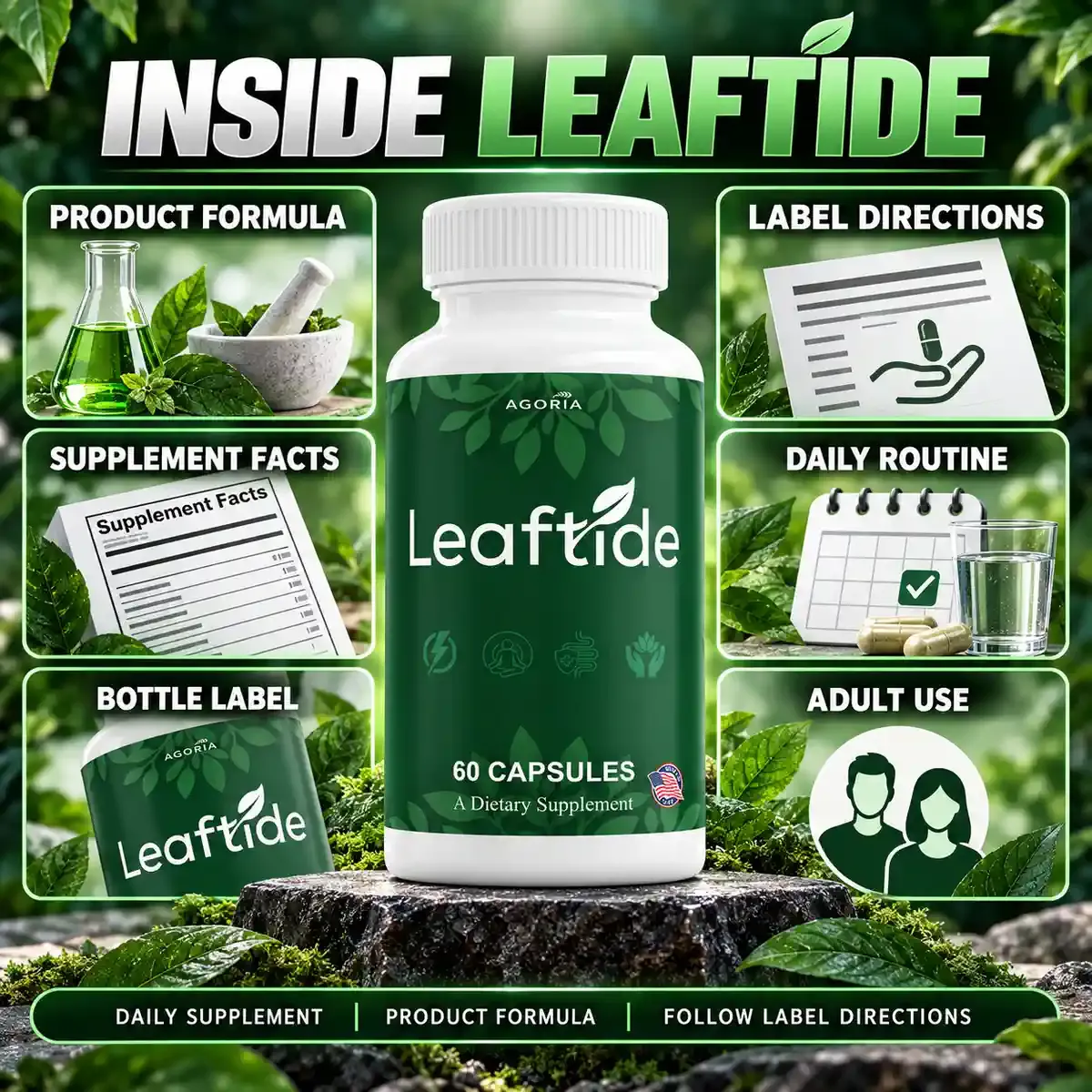
Leaftide is a capsule dietary supplement. Its 2-capsule serving holds a 1,000 mg blend of L-lysine, apple cider vinegar, garcinia cambogia, tongkat ali, horny goat weed, wild yam, cinnamon, bitter melon and raspberry ketones. None of these is a GLP-1 medicine. Our how it works page explains what each part is studied for.
Honest note
Leaftide is not a GLP-1 drug, not a weight-loss drug and has no published trial. Garcinia, its best-known weight ingredient, showed little to no effect on weight in research (NIH ODS, Weight-loss supplements). If you are weighing medical options, our weight basics guide explains how to start that talk with your doctor.
Supplements vs. GLP-1 medicines FAQ
Are there natural GLP-1 supplements?
No supplement is a GLP-1 medicine. Some products use “GLP-1” in their ads, but that does not make them a drug or give them the effects of one.
Is there a natural Ozempic?
No. Nicknames like “natural Ozempic” are marketing, not science. Prescription GLP-1 medicines are drugs that need a doctor's care.
Is Leaftide a GLP-1?
No. Leaftide is a dietary supplement with a 1,000 mg herbal and amino acid blend. It is not a GLP-1 medicine or a weight-loss drug.
Can I take a weight loss supplement with a GLP-1 medicine?
Ask the doctor who prescribed your medicine first. Some supplement ingredients act on blood sugar or blood pressure, which can add to the effects of your treatment.
How do I get a GLP-1 medicine?
Talk with your doctor. They can check whether one fits your health, explain the risks and costs, and write a prescription for a licensed pharmacy.
Is it safe to buy GLP-1 medicine online without a prescription?
No. Products sold without a prescription may be fake, mislabeled or the wrong dose. Use a licensed pharmacy and a prescription from your own doctor.
What is the GLP-1 matcha ritual?
It is a phrase from reported scam ads, not a medical treatment. MalwareTips reported a “Joe Rogan GLP-1 matcha ritual” scam tied to the Leaftide name.
Do GLP-1 supplements work like the shots?
No. A supplement sold with GLP-1 words has not been shown to work like a prescription GLP-1 medicine. Claims like that are a red flag.
What are the side effects of GLP-1 medicines?
Stomach problems such as nausea are common, and some side effects are serious. Your doctor and pharmacist can explain what to expect for the medicine you are offered.
Is there a natural GLP-1 or natural Ozempic like Leaftide?
No supplement is a GLP-1 medicine. Leaftide is a dietary supplement and not a GLP-1 drug. Ads that call a capsule, drink or matcha ritual a natural GLP-1 are making a claim you should question.
Can I take Leaftide with a GLP-1 medicine?
Ask your doctor before combining any supplement with a prescription GLP-1 medicine. Your doctor knows your dose and health history and can tell you whether a supplement fits.
Is Leaftide a prescription medicine?
No. Leaftide is a dietary supplement, not a prescription drug. GLP-1 medicines are prescription drugs that a doctor decides on, sets the dose for and monitors.
Looking at Leaftide as a supplement, not a drug?
Read the full label, ask your doctor first if you take a GLP-1 or diabetes medicine, and check the price and refund terms at checkout.